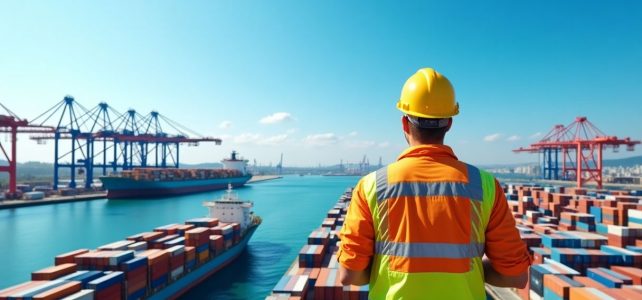
International transport is the invisible engine that drives the complex machine of the global economy. It shapes our lives in ways that many of us do not even suspect. Imagine a world without exotic fruits in our supermarkets, without foreign cars on our roads, or without the cutting-edge technology we use daily, often manufactured thousands of kilometers from our homes. International transport, whether by land, sea, or air, connects nations, stimulates global trade, and plays a predominant role in globalization.
The different modes of international transport
Goods travel across the globe via a multitude of transport modes, each with its specificities, advantages, and constraints.
- Maritime transport: It represents the backbone of global trade, transporting about 90% of goods exchanged internationally. With relatively low costs, it is ideal for heavy and bulky cargo.
- Aerial transport: Although more expensive, it is the preferred choice for high-value, perishable, or urgent products. Its speed makes it an asset for operations requiring quick delivery.
- Rail transport: Less polluting than road transport, it is particularly used in Europe and Asia for transporting goods over long land distances.
- Road transport: Essential for transporting goods over short distances, it ensures the link between other transport modes and final destinations.
Challenges of international transport
The international transport sector faces various challenges that can disrupt the regular flow of goods around the world.
Fluctuations in fuel prices represent a major obstacle, directly influencing transport costs. Companies must constantly adapt to these variations to remain competitive. International regulations, often divergent from one country to another, can complicate the logistics process and require careful management to avoid delays.
Moreover, environmental concerns are pushing the sector to seek more eco-friendly solutions, such as the development of alternative fuels and optimizing routes to reduce carbon footprints.
Finally, geopolitical tensions can cause trade blockages or unpredictable tariff increases, thereby disrupting the global supply chain.
Technologies and innovations in international transport
The digital age is transforming the international transport sector, introducing innovations that enhance the efficiency and security of operations.
- Blockchain: This revolutionary technology ensures transparency and traceability of commercial transactions, reducing fraud and simplifying customs processes.
- IoT sensors: Integrated into containers, they allow real-time tracking of goods, ensuring their security and optimizing logistics chains.
- Drones: While primarily used for delivering small packages, their potential for monitoring infrastructure and rapid delivery in remote areas is promising.
- Autonomous vehicles: Emerging in road transport, they promise cost reductions and improved road safety.
The impact of international transport on the economy and society
International transport impacts our daily lives far beyond the mere movement of goods; it is a vector of economic growth and a facilitator of cultural diversity.
By stimulating international trade, it promotes access to global markets for local businesses, boosting their growth and profitability. Consequently, it generates jobs worldwide, not only in the transport sector but also in related fields such as logistics, engineering, and customs services.
On a societal level, it influences our lifestyles by providing access to a variety of products from different cultures, enriching our daily lives and broadening our horizons.
At the same time, it encourages international cooperation and the sharing of technological knowledge, strengthening ties between nations.