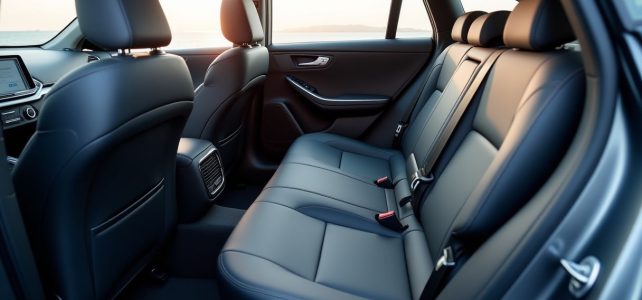
Modern cars offer an impressive variety of configurations designed to meet the diverse needs of drivers. Among these configurations, cars equipped with three true rear seats attract particular interest, whether for large families or comfort enthusiasts. However, one question remains: do these vehicles consume more fuel? As automakers compete to optimize energy efficiency, it is important to examine the factors that may influence the consumption of vehicles with this specific feature.
Weight and Its Influence on Consumption
The weight of a car plays a determining role in fuel consumption. Vehicles with three true rear seats are often designed to accommodate a larger number of passengers, resulting in an increase in total weight.
- Reinforced structure: to accommodate these additional seats, the car’s structure is often reinforced, which can lead to excess weight compared to traditional models.
- Materials used: the materials chosen for designing these cars must be both lightweight and robust, a delicate balance that can influence consumption.
- Load capacity: with a higher load capacity, these vehicles can carry more luggage, which can further affect fuel consumption, especially on long trips.
Aerodynamics and Its Role
In terms of fuel consumption, the aerodynamics of a vehicle is an essential factor. Cars with three true rear seats present unique characteristics that can impact their aerodynamic profile.
The need to provide more interior volume may lead manufacturers to modify the shape and size of the vehicle, sometimes compromising its aerodynamic performance. Since air resistance increases with speed, cars with less aerodynamic shapes will tend to consume more, especially at high speeds. However, the efforts of engineers to design spacious yet fuel-efficient vehicles remain remarkable, with the use of innovative design elements to minimize the impact on energy efficiency.
Engine Performance and Technological Options
Modern engines are designed to be both powerful and fuel-efficient, but the demand for performance varies among vehicles, particularly for those designed to carry more passengers.
- Hybrid technologies: the integration of hybrid engines in this type of vehicle helps offset the increased consumption. Hybrids combine internal combustion engines and electric motors for better efficiency.
- Electronic management: advanced electronic management systems play a crucial role in adjusting the engine’s operation in real-time to optimize consumption.
- Alternatives to diesel: the choice between diesel and gasoline engines can significantly influence consumption, with diesel engines generally being more efficient for long trips.
- Car insurance: the choice of engine and technological options can also impact the vehicle’s car insurance.
Impact of Driving Habits
Driving habits greatly influence a vehicle’s fuel consumption. Cars with three true rear seats are no exception to this rule.
An aggressive driving style, which includes rapid accelerations and sudden braking, can lead to excessive fuel consumption. For drivers of more spacious vehicles, adopting a smooth and steady driving style helps reduce consumption. City driving, often punctuated by frequent stops, exacerbates this phenomenon compared to highway driving. Finally, adhering to speed limits and optimally using cruise control are practices that help maintain reasonable consumption, even for heavier and more spacious vehicles.
The energy efficiency of cars with three true rear seats depends on multiple factors, including weight, aerodynamics, onboard technologies, and driving habits. Manufacturers strive to find a balance between comfort, capacity, and energy efficiency.