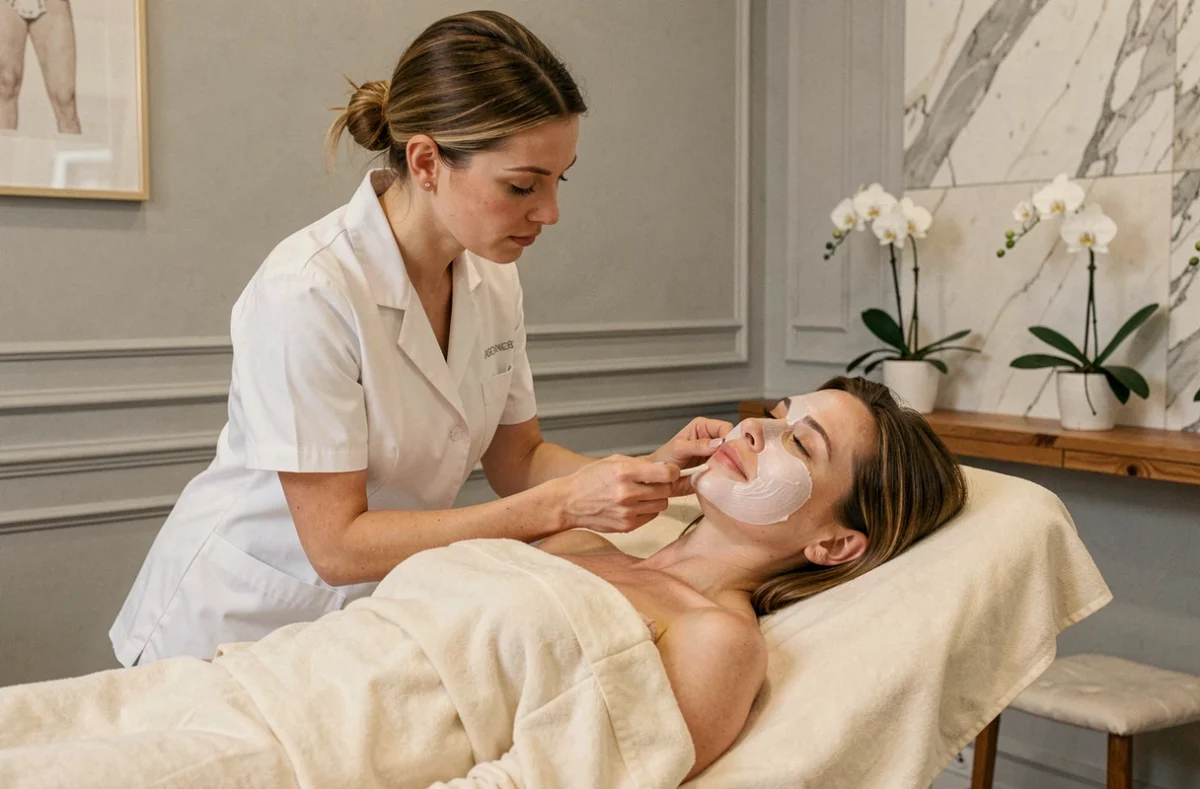
A beauty institute in Paris refers to a facility where qualified beauticians perform facial treatments, body care, hair removal, and wellness massages. The density of institutes in the capital makes the choice complex, and the price differences for the same service can vary from simple to triple depending on the district and the positioning of the address.
2024 Decree on Laser Hair Removal in Beauty Institutes
This topic is rarely addressed in address guides, but it directly affects the quality and safety of a common service. The decree no. 2024-470 of May 24, 2024 has opened laser and intense pulsed light (IPL) hair removal to qualified aesthetic professionals and nurses, in addition to doctors. Before this text, only doctors could legally use these devices for non-therapeutic purposes.
This opening does not mean that all Parisian institutes can offer these services. The order of February 19, 2025, clarified the training required for non-doctor professionals. Specifically, before booking a laser hair removal session in an institute, it is relevant to ask for the training certificate of the person operating the device, not just the name of the brand.
A session compliant with the legal framework includes an evaluation of the skin type and prior information on risks, eye protection during treatment, and a reminder of contraindications. An online booking form that does not mention any of these steps does not allow for the assessment of the actual conditions of the service. Among the services on Belle et Unique, these practical details are discussed to help compare offers.
Facial Treatments in Institutes in Paris: Choosing Criteria Beyond Price
Facial treatments are the most requested service in beauty institutes in Paris. The range goes from classic skin cleansing to anti-aging protocols using devices like radiofrequency or LED. The price alone does not inform about the relevance of the treatment for a specific skin type.
Three technical criteria should be checked before making an appointment:
- The prior skin diagnosis: a serious institute offers a visual or instrumental analysis (Wood’s lamp, for example) before recommending a protocol. Without this diagnosis, the treatment remains generic.
- The active ingredients used: the composition of the products applied (hyaluronic acid, vitamin C, niacinamide) must be adapted to the identified issue. Asking for the list of brands used allows for verification of this point.
- The actual duration of the treatment compared to the announced duration: some services include the time for welcome and makeup removal in the displayed slot, which reduces the active treatment time.
An effective facial treatment relies on a personalized diagnosis, not on an identical protocol applied to all skin types. Online reviews often mention the ambiance or welcome, rarely the relevance of the diagnosis. Yet, this is the point that determines the visible result on the skin.
Massages and Body Treatments: What Distinguishes an Institute from a Spa
In Paris, the boundary between a beauty institute and a spa remains unclear for many clients. An institute offers aesthetic treatments performed by beauticians holding a CAP, BP, or BTS in aesthetic-cosmetics. A spa focuses more on overall well-being, sometimes with access to facilities (hammam, jacuzzi, sauna).
For a massage in an institute, the service generally aims at drainage, muscle relaxation, or slimming. Massages in institutes do not fall under the medical domain and cannot be classified as therapeutic. This distinction has a practical consequence: no reimbursement by health insurance is possible for a massage in an institute, unlike certain physiotherapy sessions.
The most frequently offered body treatments in Parisian institutes include relaxing modeling, manual lymphatic drainage, wraps (algae, mud), and body scrubs. The choice depends on the desired goal. Lymphatic drainage does not have the same purpose as hot stone modeling, even if both last an hour.
Hair Removal in Institutes in Paris: Techniques and Price Ranges
Hair removal remains one of the most common reasons for visiting a beauty institute. Three techniques coexist in Parisian institutes: wax (hot, warm, or oriental), intense pulsed light (IPL), and, since the 2024 decree, laser for compliant establishments.
Wax remains the most financially accessible method. Prices vary according to the treated area and the district. Hair removal using intense pulsed light or laser costs more per session, but the total number of sessions decreases over time, which changes the calculation over the long term.
Checking the regulatory compliance of the institute is a safety step, not a formality. For laser or IPL hair removal, regulations impose specific conditions on the practitioner’s training, skin evaluation, and information on contraindications. An institute that does not ask any questions about ongoing medical treatments or recent sun exposure before a laser session does not comply with the legal framework.
Prices of Treatments in Institutes in Paris: Understanding the Discrepancies
The price discrepancies between two Parisian institutes for the same service can be explained by several concrete factors. The location (an institute on the Champs-Élysées incurs much higher costs than an institute in the 20th arrondissement), the cosmetic brands used, the actual duration of the treatment, and the qualification level of the team directly influence the price.
A low price is not a negative signal in itself, but an abnormally low price for a technical service should raise alarms. A laser hair removal service charged well below market rates may indicate a less efficient device, a shortened session, or an inadequately trained practitioner.
Comparing services from one institute to another requires aligning comparable elements: active treatment duration, products used, professional qualifications, and hygiene conditions. Online booking platforms allow for consulting customer reviews, but these feedbacks focus more on the overall experience than on the technicality of the treatment.
The choice of a beauty institute in Paris benefits from being based on verifiable criteria (training, diagnosis, regulatory compliance) rather than solely on marketing promises. Recent legal developments, particularly regarding laser hair removal, reinforce this demand for transparency for clients.