
Buying wine online means accessing thousands of references without leaving home. However, you need to know where to look to avoid unpleasant surprises: poorly stored bottles, excessive shipping fees, or misleading descriptions. Several specialized sites have established themselves in France, each with a distinct positioning depending on whether you’re looking for a fine Bordeaux, a white Burgundy, or an affordable organic bottle.
Delivery and storage conditions: the criterion that no one checks first
Have you ever received a package with a lukewarm bottle in the middle of summer? The quality of an online wine sales site is not only measured by its catalog. It also depends on logistics.
A good online wine merchant ships in padded cartons, sometimes insulated during periods of high heat. Some suspend shipments beyond a certain temperature threshold. Others deliver to air-conditioned pickup points.
Check the shipping conditions before confirming your cart. Look for whether the site specifies the carrier used, the guaranteed delivery time, and the policy in case of breakage. A serious site displays this information without burying it in its general conditions.
Shipping fees vary significantly from one retailer to another. Free shipping above a certain amount is common, but the threshold differs. Comparing this point helps avoid paying more for shipping than for the wine itself.
By browsing TwimmCook’s wine selection, you will find a detailed comparison that incorporates these often-overlooked logistical criteria.
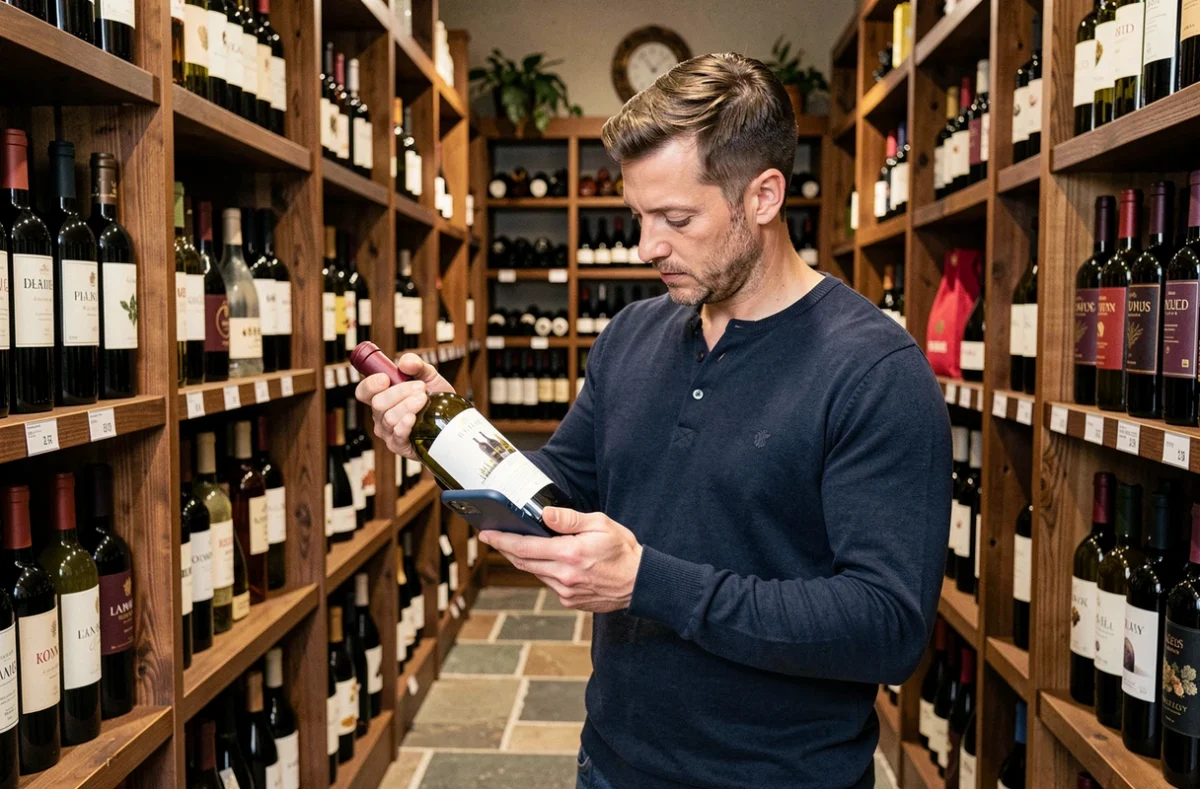
Online wine sales sites: what type of platform for which buyer profile
Not all sites cater to the same audience. Understanding their model helps choose the one that matches your habits.
Generalist online wine merchants
Platforms like Vinatis offer a very wide catalog: red, white, rosé wines, champagnes, spirits. Their strength lies in the volume of references and regular promotions. A generalist is suitable for buyers who want to find everything in one place.
Product sheets often include customer reviews, tasting notes, and food and wine pairing suggestions. This is a good starting point for beginners.
Auction sites and rare wines
iDealwine specializes in online auctions of old wines, grand crus, and hard-to-find bottles. The process resembles that of an auction house: you bid, and the final price depends on demand.
Auction sites are suitable for collectors and enthusiasts of old vintages. Prices can be very competitive for prestigious appellations, but you need to monitor the lots regularly.
Direct sales from wineries
More and more winemakers are selling their bottles directly from their own websites. This short circuit eliminates intermediaries. A recent report described this trend as a discreet but very real evolution in the market.
The advantage: often lower prices and direct contact with the producer. The downside: you need to know the winery beforehand, and logistics can sometimes be artisanal.
Organic wines and low alcohol: how to spot a reliable online offer
Organic wine is progressing in certain channels, particularly among wine merchants and direct sales, but is declining in mass distribution according to Sudvinbio data for 2024. Online, the situation is mixed.
Some sites clearly display certifications (AB, Demeter, HVE). Others use vague terms like “natural” or “reasoned” without regulatory precision. Here’s what to check before buying:
- The presence of the official certification logo on the product sheet, not just in the marketing description
- The name of the certifying body (Ecocert, Bureau Veritas, etc.), which guarantees independent control
- The distinction between “wine from organic grapes” and “organic wine,” two mentions that do not cover the same scope
A reliable site details the certification rather than just using the word “organic” in large letters.
Non-alcoholic or low-alcohol wines are also gaining visibility in online catalogs. The 2026 wine fairs highlighted this segment, indicating that there is demand. If this niche interests you, filter by alcohol content when the site allows it.
Selection criteria for comparing online wine sites
Beyond the price displayed on the bottle, several elements distinguish a recommendable site from a rough showcase.
- The depth of the catalog by region: a site that offers ten references in Burgundy and three in the Loire does not meet the same needs as a site with several hundred appellations
- The quality of descriptions: food and wine pairings, aging potential, serving temperature, grape variety, are information that genuinely helps in making a choice
- The return policy: a site that accepts returns on defective bottles (corked, oxidized) inspires more confidence
- Verified reviews: prefer platforms where reviews are linked to a confirmed purchase, not anonymous comments
According to the SOWINE/Dynata study cited by Les 5 du Vin in October 2026, nearly four out of ten French people reported buying wine online. This figure coexists with an overall decline in wine buyers, which means that the online channel attracts a growing share of a contracting market. The sites that will survive are those that focus on advice and transparency, not just on low prices.
Buying red, white, or champagne wine: adapting the site to the type of wine sought
An excellent site for red Bordeaux may not necessarily be the best for champagne from a small producer. Catalogs often reflect partnerships established with wineries.
For champagnes from large houses, generalists are sufficient. For confidential cuvées, turn to online wine merchants specializing in that region, or to direct sales.
Wines from Saint-Émilion, Pauillac, or Margaux are easily found on most platforms. However, for less publicized appellations (Marcillac, Irouléguy, Palette), niche sites or direct sales remain the most reliable channels.
Rosé and entry-level French wines are better represented on generalist sites that negotiate volumes. For characterful bottles, an online merchant with a smaller but curated selection will provide more satisfaction than a digital hypermarket.
Choosing where to buy wine online comes down to identifying your own profile: budget, preferred regions, a taste for discovery, or loyalty to well-known appellations. The best site is the one whose selection matches what you would actually drink.