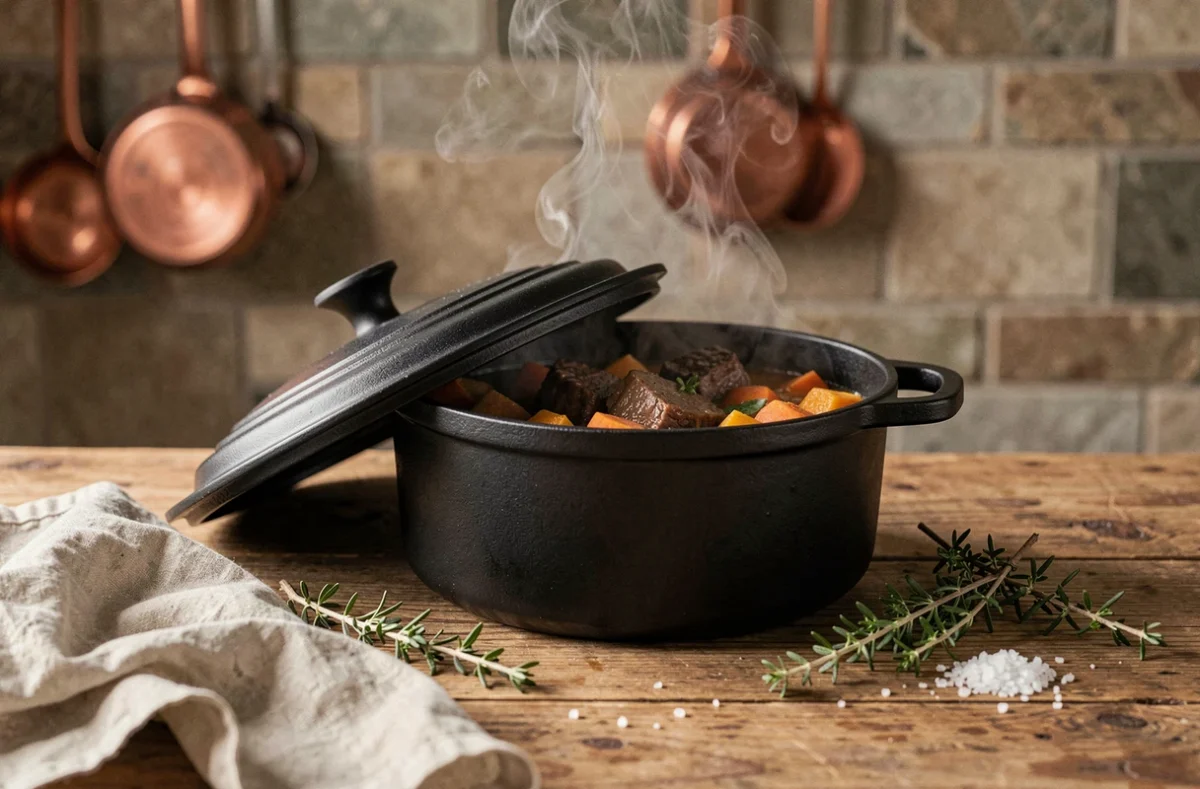
You take a cast-iron Dutch oven out of the cupboard to make braised beef, set it on the hob, and the first things you notice are never the colour or the brand. It’s the weight in your arms, the size relative to the amount of meat, and the confidence that the enamel will last. Choosing a cast-iron Dutch oven for successful slow-cooked dishes means weighing up very practical considerations that product listings don’t always prioritise.
Chipped enamel on a cast-iron Dutch oven: keep cooking or replace it?
A chip in the enamel on the bottom of the Dutch oven is something no one expects when buying one. The exposed raw cast iron beneath the chip is not toxic in itself, but it will rust when exposed to moisture and acids such as wine, tomatoes and vinegar.
If the chip is superficial and limited to a side wall, you can keep cooking while monitoring it. A chip on the bottom, where it comes into direct contact with food, is a real problem: rust will form again between uses, and no seasoning will last on partially exposed enameled cast iron.
As for repairs, there is no reliable consumer-grade solution. The enamel is fired at a very high temperature during manufacturing, and no kit sold online can recreate that bond. More established brands sometimes offer a replacement under their commercial warranty, but the terms vary. Some advertise a lifetime warranty, while others limit coverage to a few years or exclude normal enamel wear.
We compare models, prices and colours, but forget to read the warranty exclusions. Before buying, check exactly what the manufacturer covers in the event of chipping, and distinguish the commercial warranty from the statutory warranties that apply to every purchase. For a closer look at the differences between models and brands, une-cocotte-en-fonte.com explains these criteria in practical terms.

Induction compatibility and heat-up time: what affects cooking
Most traditional cast-iron Dutch ovens work on induction, but compatibility alone does not guarantee even cooking. The manufacturers we consulted recommend heating the pot gradually. Turning the hob straight up to maximum can create hot spots that make food stick to the bottom, even with high-quality enamel.
Another point rarely mentioned in guides is the Dutch oven’s diameter relative to the cooking zone. A pot that is too small for the induction zone can interfere with hob detection or heat inefficiently. We often choose a size based on the number of people we’re cooking for, but it’s also worth checking that it matches the diameter of the main cooking zone.
Maximum oven temperature: the lid knob sets the limit
You put the Dutch oven in the oven to finish braising, assuming cast iron can handle any temperature. The pot itself can. But the lid knob often sets a lower limit. The maximum temperature varies from model to model depending on the material (Bakelite, stainless steel or brass), even within the same brand. Check the instructions for the exact model before buying if you plan to use it in the oven regularly.
Cast-iron Dutch oven size and shape: start with the dish, not the number of people
Every guide repeats the same chart: 2 people = 18 cm, 4 people = 24 cm, 6 people = 28 cm. In practice, the type of slow-cooked dish determines the size you need.
- A whole roast chicken cooked in a Dutch oven needs an oval shape and a diameter greater than the length of the bird with its legs tucked in—not a size based on the number of servings.
- Beef bourguignon for four needs enough room for the meat to sit in the liquid without being crowded, which points to a round Dutch oven at least 24 cm in diameter.
- Bread baked in a Dutch oven calls for a model that can go in the oven without a low temperature limit on the lid, and enough capacity for the dough to rise without touching the top.
Choose your Dutch oven based on the three dishes you make most often, not on a theoretical number of people. An oversized Dutch oven can end up in the cupboard because you don’t want to lift several kilos of empty cast iron for everyday cooking.
Care and thermal shock: mistakes that shorten its lifespan
Enameled cast iron can withstand almost anything except sudden temperature changes. Rinsing a hot Dutch oven under cold water is the mistake that causes most enamel cracks. Manufacturers (Staub, Le Creuset) recommend letting the pot cool to room temperature before exposing it to water, and not filling it immediately after cooking.
These instructions may seem obvious, but they determine how long the cookware will actually last. A well-maintained cast-iron Dutch oven lasts for decades. Repeated thermal shock can cause the enamel to deteriorate within a few years, whatever the purchase price.
Interior coatings and regulatory compliance
For aluminum cast-iron Dutch ovens, the interior coating (often PTFE non-stick or ceramic) is affected by recent European regulations on food-contact materials. Transition periods vary depending on the product and its intended use. Rather than relying solely on the word “non-stick” on the packaging, check the compliance information provided by the manufacturer for the specific model you’re considering.
Cast-iron Dutch ovens: budget and practical trade-offs
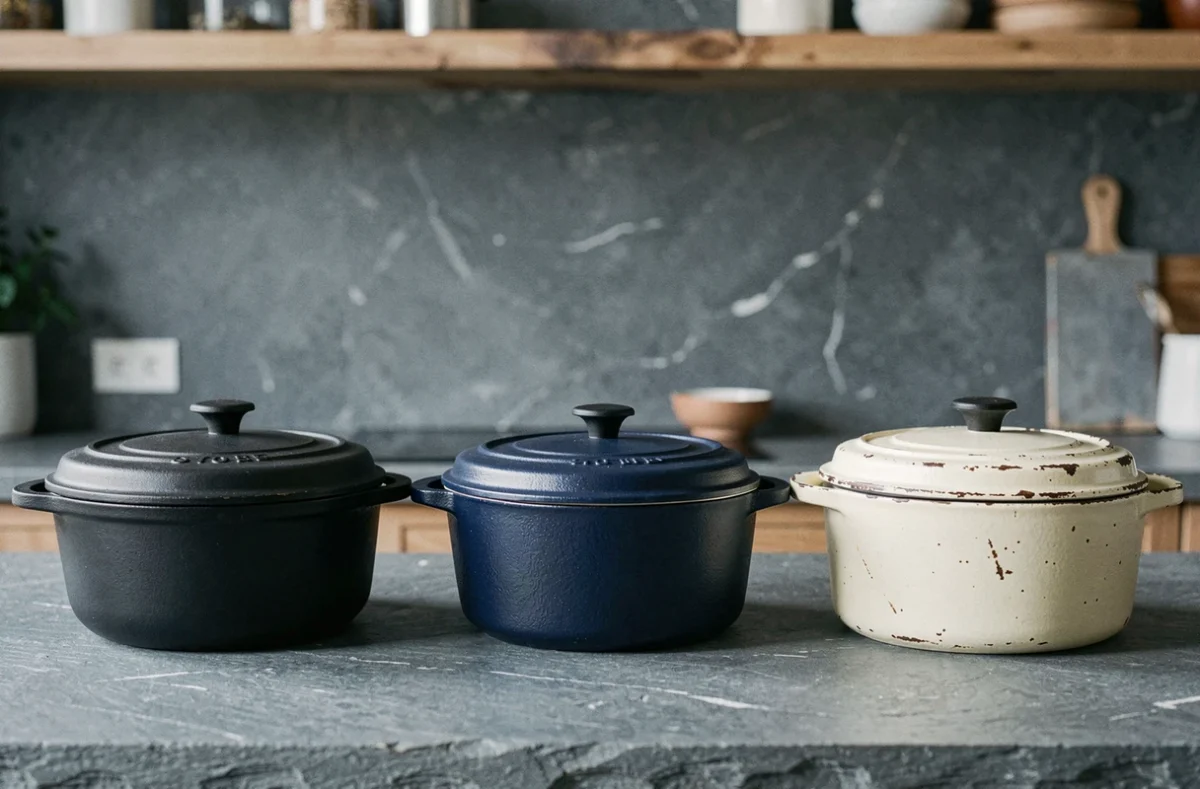
Prices range from a few dozen euros for a medium-capacity aluminum cast-iron Dutch oven to more than 300 euros for traditional cast-iron models from heritage brands. The price difference reflects the material’s density, enamel quality, handle finish and warranty coverage.
- An aluminum cast-iron Dutch oven is a good choice if weight is a deciding factor or you’re on a tight budget, but its heat retention is significantly lower than that of cast iron.
- A traditional enameled cast-iron Dutch oven is a bigger investment, offset by greater durability and more even results when slow cooking.
- Entry-level traditional cast-iron models are available, but check the enamel quality and warranty terms before deciding.
The true cost of a Dutch oven is measured in years of use, not by its price tag. A well-chosen Dutch oven that suits your cooking and is properly cared for is the one kitchen tool that gets better with age.