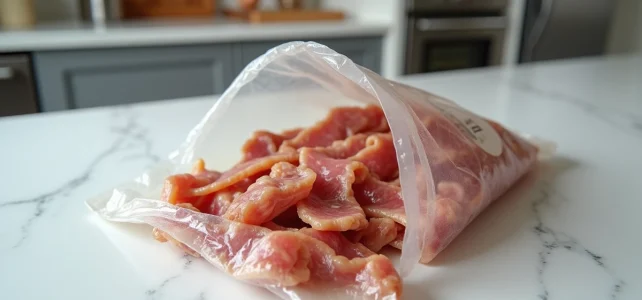
Bacon bits are among the most common charcuterie products found in French refrigerators, and among the most often forgotten at the back of a shelf. Their expiration date (DLC) serves as the first reference, but it doesn’t tell the whole story, especially after the package has been opened. Color, smell, texture: each parameter provides different information about the actual state of the product.
DLC, time after opening, and type of bacon bits: durations to compare
The DLC printed on the packaging applies as long as the package remains closed and stored in the refrigerator. Once the plastic film is pierced, the conditions change radically.
| Situation | Indicative shelf life | Note |
|---|---|---|
| Closed package, refrigerator (0-4 °C) | Until the DLC | Valid only if the cold chain has not been broken |
| Opened package, refrigerator | 48 hours maximum | Even if the displayed DLC is further away |
| Classic bacon bits (with nitrite) | Stable pink color for longer | Nitrites slow down oxidation and limit pathogenic flora |
| Nitrite-free bacon bits | Faster greying, increased microbial risk | The color change is normal but the safety margin is shorter |
| Frozen bacon bits | Several months in the freezer | Freeze before the DLC, thaw in the refrigerator |
The most underestimated point in this table concerns the time after opening. Many consumers rely solely on the printed DLC while opened bacon bits deteriorate well before this date. Recent industry recommendations converge on a period of 48 hours after opening, beyond which the product should no longer be consumed.
To delve deeper into the topic of shelf life and color of bacon bits, the difference between nitrite and nitrite-free bacon bits deserves special attention, as it alters the visual reading of the product.

Color of expired bacon bits: what pink, gray, and brown really mean
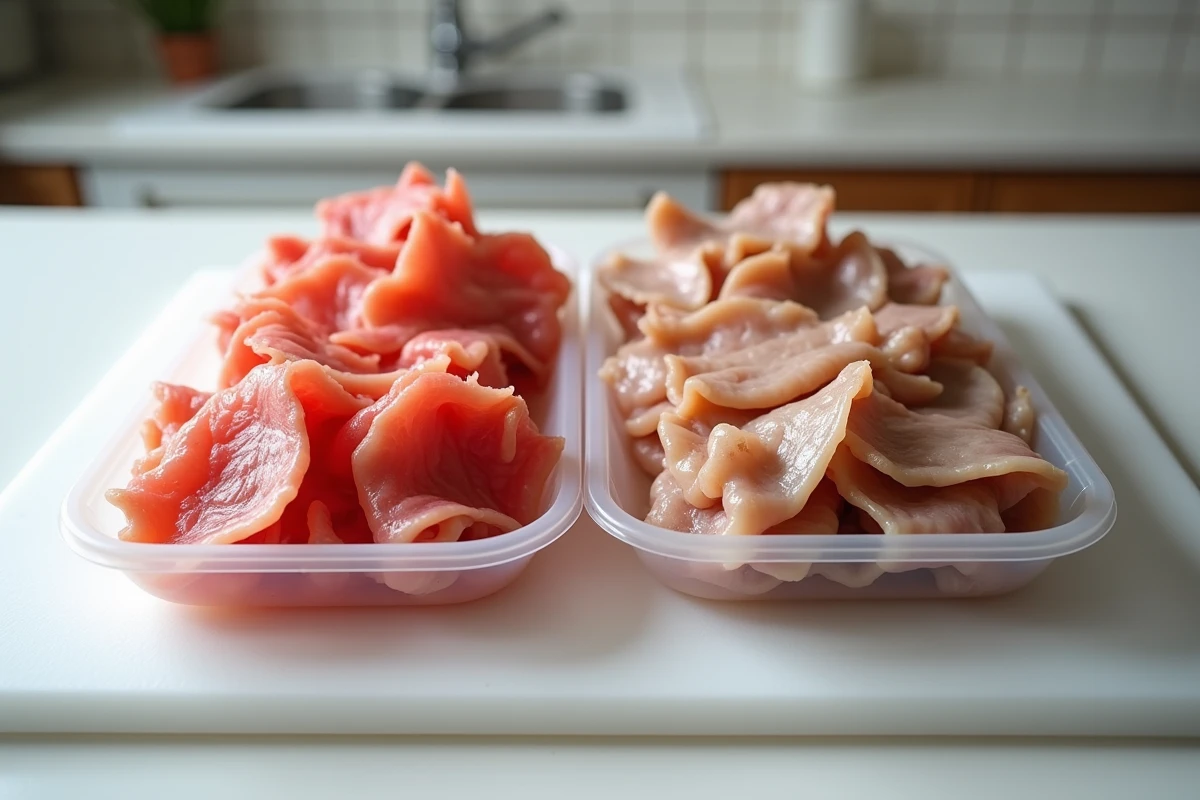
Color remains the first reflex for consumers to assess freshness. On classic bacon bits containing nitrites, the characteristic pink hue comes from the chemical reaction between sodium nitrite and the myoglobin in the meat. This pink is artificially stable.
On nitrite-free bacon bits, the natural color leans more towards a rosy beige. A slight greying does not necessarily indicate a dangerous product; it reflects normal surface oxidation. However, a clear shift towards brown or green indicates advanced spoilage.
When color is not enough
Several recalls of bacon bits in recent years due to salmonella contamination show that a product can appear completely normal (pink color, firm texture) while being contaminated. Pathogenic bacteria like Salmonella or Listeria do not alter the color or smell of the product in the early stages of contamination.
A bacon bit that appears normal can be dangerous, making the DLC and adherence to the cold chain more reliable than visual inspection alone.
Smell and texture: warning signals complementing color
Sensory analysis is not limited to sight. Two other parameters help to decide when color leaves doubt.
- A sour, acidic, or sulfurous smell betrays surface bacterial proliferation. Fresh bacon bits emit a neutral smell of slightly smoked charcuterie. Any sharp deviation towards acidity or ammonia is a signal for immediate disposal.
- A sticky or tacky texture results from the formation of a bacterial biofilm. Fresh bacon bits remain slightly moist but slide between the fingers without leaving a viscous film.
- A swollen appearance of the vacuum packaging, even before opening, signals gas production by microorganisms. This package should not be opened.
These three combined criteria (smell, texture, state of the packaging) provide a more complete diagnosis than color alone. Any doubt about one of these parameters justifies discarding the product.
Health risks of expired bacon bits: salmonella and listeria
Bacon bits are a pork-based charcuterie product, often packaged under modified atmosphere. This technique extends shelf life but does not sterilize the product. Two bacteria concentrate the risks.
Salmonella
Product recalls have targeted bacon bits from major brands for salmonella contamination. Symptoms (diarrhea, fever, abdominal cramps) usually appear within 12 to 72 hours after ingestion. Cooking at high temperatures destroys the bacteria, but a heavily contaminated product remains at risk if cooking is insufficient or uneven.
Listeria monocytogenes
This bacterium develops even at low temperatures, including in a properly set refrigerator. Listeria proliferates in the cold, unlike most foodborne bacteria. On bacon bits, the risk significantly increases after the DLC, as the bacterial load grows with storage time.
For immunocompromised individuals, pregnant women, and the elderly, consuming bacon bits past their DLC represents a disproportionate risk compared to the savings made.
Nitrite-free bacon bits: a different reading of freshness
Nitrite-free ranges, developed by several brands in recent years, respond to a growing consumer demand. The removal of nitrites modifies two parameters simultaneously.
The color loses its artificial stability. A nitrite-free bacon bit greys faster in the open air, which does not necessarily indicate microbiological degradation. Conversely, the absence of nitrite accelerates the development of pathogenic bacteria after opening, as these additives play a documented antimicrobial role.
In practice, a consumer accustomed to classic bacon bits may alarm at rapid greying on nitrite-free products, while the real danger is invisible: the pathogenic flora progresses faster without this preservative agent. Strict adherence to the DLC and the 48-hour time frame after opening becomes even more crucial for these references.
The freshness of bacon bits is measured by three complementary channels: the date (DLC and time after opening), the senses (color, smell, texture), and the type of product (with or without nitrite). None of these criteria taken in isolation guarantees food safety. The most reliable remains the intersection between adherence to the cold chain and the DLC, as some contaminations are undetectable to the naked eye.