
Tires are an essential element for the safety and performance of a vehicle. Proper maintenance ensures not only better grip on the road but also helps extend their lifespan and optimize fuel consumption. Drivers should therefore be aware of the appropriate techniques to keep their tires in good condition. This includes regularly checking the pressure, inspecting for wear, performing periodic rotations, and maintaining constant cleanliness to prevent any premature deterioration. Adopting these maintenance habits can lead to safer and more economical journeys.
Best practices for maintaining tire pressure and wear
Adhere to the inflation pressure recommended by manufacturers for your car tires. This measure, fundamental for safety and handling, directly influences fuel consumption. Inadequate pressure increases the risk of accidents by compromising the vehicle’s responsiveness. An under-inflated tire wears prematurely on the sides, while an over-inflated tire wears in the center. Check the pressure at least once a month and before each long trip, referring to the guidelines provided in your vehicle’s manual or on the door frame.
Regularly inspect the wear of your tires. Worn tread compromises grip on wet surfaces, increasing the risk of hydroplaning. The law mandates a minimum of 1.6 mm for the depth of the main grooves. Use a wear indicator or entrust this task to a professional to ensure an accurate assessment. In case of a puncture, a tire repair with a plug can be considered, but only if the damage is located on the tread and is small in size.
Maintenance techniques include rotating tires to even out wear. Michelin and other manufacturers recommend swapping front and rear tires at regular intervals, often every 10,000 km, to balance the stresses experienced. This practice extends the lifespan of the tires and maintains good driving performance.
Pay attention to the advice given by experts. Studies conducted by organizations like Michelin reveal that drivers often neglect tire maintenance. However, this negligence can lead to serious consequences. Therefore, be attentive to manufacturers’ recommendations and do not hesitate to seek professionals for periodic checks.
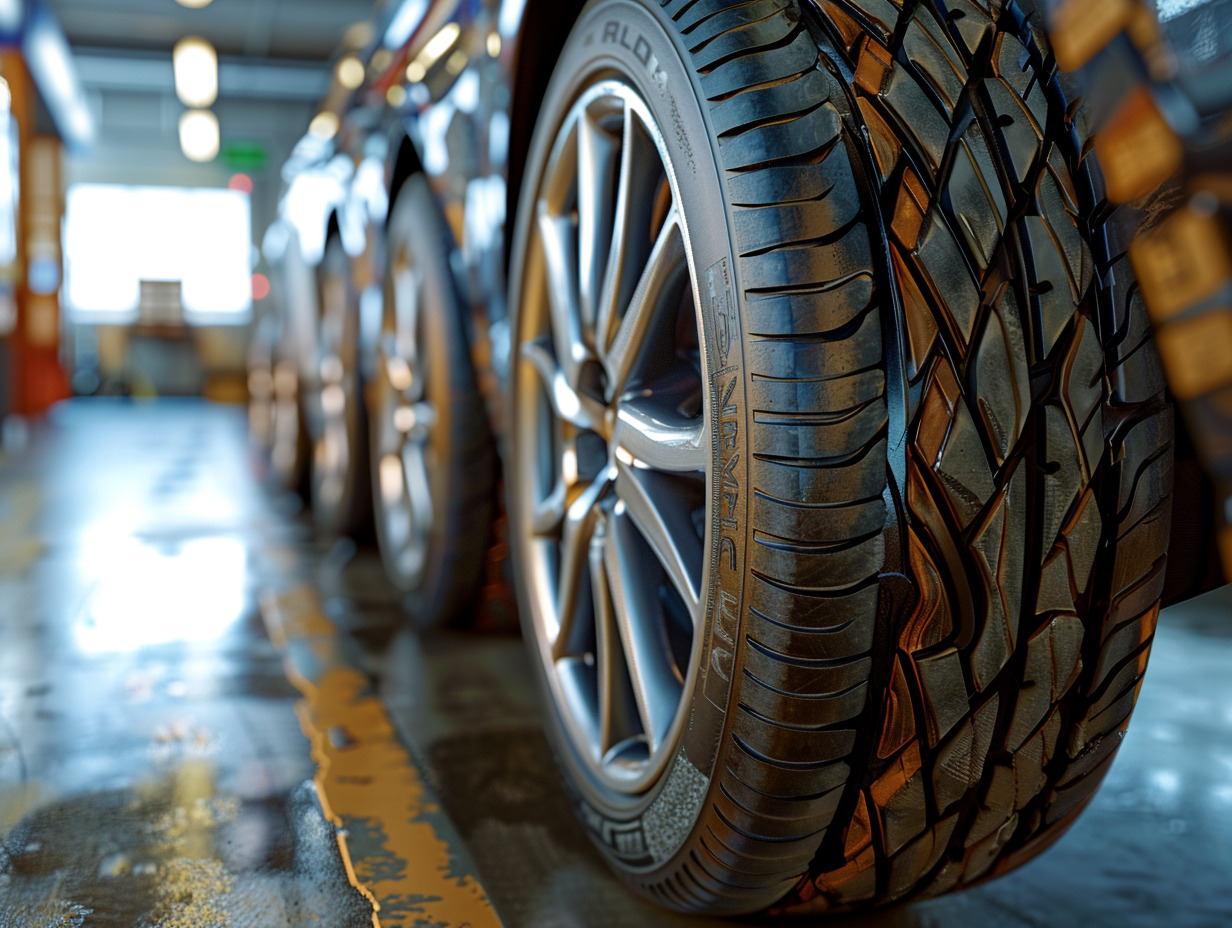
Key steps for cleaning and storing tires
Carefully clean your tires and rims is a crucial step in maintaining their longevity and effectiveness. Use specific auto detailing products that preserve the integrity of the rubber and materials of your rims. Training provided by organizations such as Formation Detailing can equip you with the necessary knowledge to perform this task expertly. After cleaning, ensure that the tires are completely dry before storing them to prevent any corrosion or degradation.
A meticulous storage of off-season tires contributes to their preservation. Store them in a cool, dry place away from direct sunlight to avoid altering the rubber components. If the tires are mounted on rims, store them vertically to reduce deformation. Without rims, stack them or hang them horizontally. Ensure that the tires do not come into contact with chemicals or hydrocarbons that could deteriorate them.
Online resources, such as the Tiregom Guide, offer detailed advice to increase the lifespan of your tires. Follow these recommendations to maximize the use of your all-season or winter tires. Regular maintenance and proper storage are synonymous with enhanced performance and safety on the road.
The Vroomly Blog, on the other hand, provides a wealth of practical information for caring for your tires. From selecting the storage location to the cleaning method, every detail matters. Consider this specialized information to ensure that your tires remain in optimal condition, ready to face the most demanding road conditions.