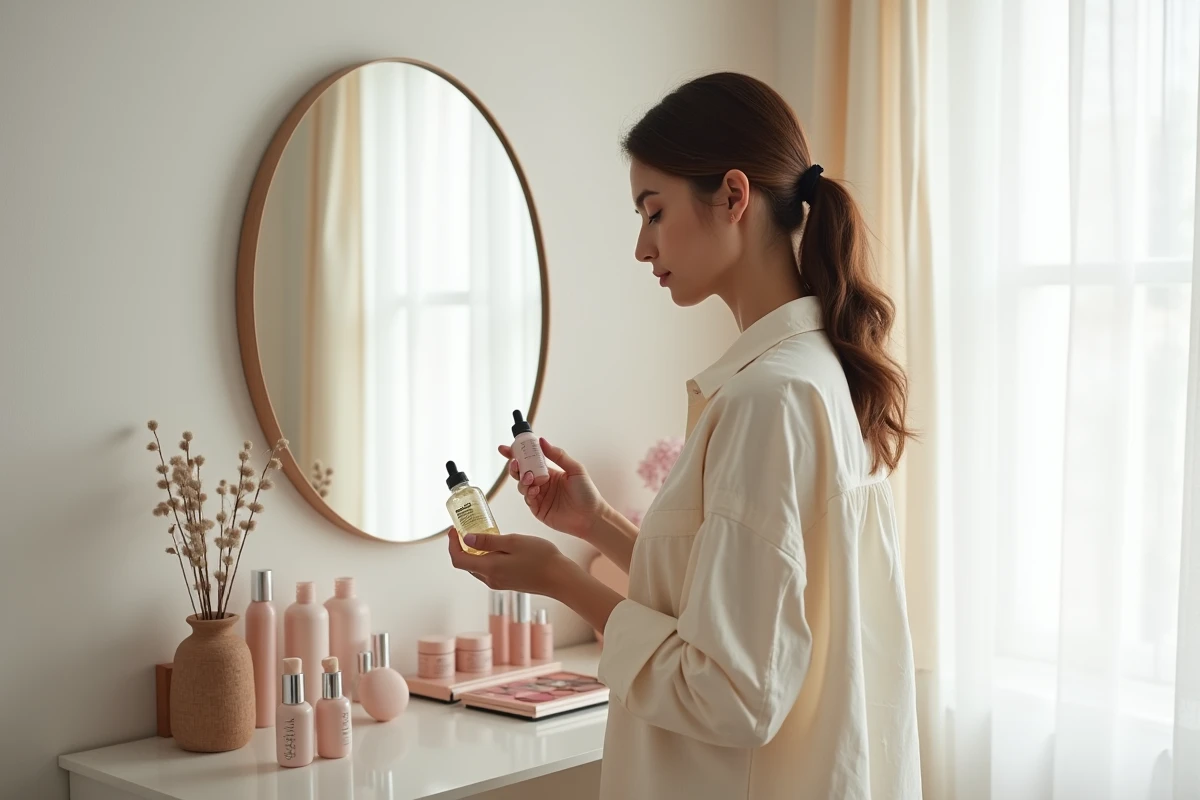
A beauty trend is not just about a viral product on social media. It is a deep movement that modifies the composition of formulas, sales formats, and consumer expectations over several seasons. In 2025-2026, these movements converge towards a specific point: the simplification of routines, stricter regulatory frameworks for “clean” claims, and an increasing role of personalization in the choice of cosmetic products online.
“Clean” Claims and European Regulation: What Changes for Online Stores
The term “clean beauty” has long served as a marketing argument without a precise legal framework. Directive (EU) 2024/825, adopted in February 2024, changes the game. It prohibits vague environmental claims (“eco-friendly,” “climate neutral”) and private labels without a recognized reference.
For online cosmetic stores, the consequence is direct: every mention of “natural,” “green,” or “chemical-free” must now rely on verifiable proof accessible at the time of purchase. The European Commission specifies that e-commerce merchants must provide this documentation on their product sheets.
This tightening favors platforms that list brands transparent about the composition of their formulas. Catalogs that group cosmetic products with complete INCI lists and recognized certifications (Ecocert, Cosmos, Natrue) gain credibility. In this regard, Beauty Girl’s online store features references with detailed compositions, making it easier for consumers concerned about these new requirements to verify.

Minimalist Routines and Personalized Subscriptions: The Format Redefining Beauty Purchases
The “skin minimalism” trend goes beyond simply advising to reduce the number of products on one’s bathroom shelf. It now structures a complete business model.
Brands like Typology or Skincraft have been offering subscriptions limited to two to four products since 2024-2025. The principle: an initial questionnaire assesses skin type, then the assortment is automatically adjusted based on the season or customer feedback. Reports from Mintel 2024 and NielsenIQ 2025 confirm a growing preference for simplified and guided routines.
This model differs from old beauty boxes that sent random samples. Here, each product is selected for a specific use in a reduced routine. The result: less waste, better adherence to the routine, and a higher re-subscription rate according to industry players.
Criteria for a Good Minimalist Beauty Subscription
- A serious initial diagnosis based on a detailed questionnaire about skin type, known allergies, and existing habits, not just a simple selection of aesthetic preferences
- A limited number of products (four maximum) with a clear function for each reference in the daily routine
- A seasonal adjustment mechanism or based on customer feedback, to avoid receiving the same moisturizer in summer as in winter
- Total transparency about the composition, with access to INCI lists and certifications before ordering
Buying Makeup and Skincare Products Online: Concrete Guidelines to Avoid Mistakes
Buying cosmetics online has long suffered from a simple problem: you cannot test a texture or shade on a screen. Several tools are gradually changing this limitation, without completely eliminating it.
Skin diagnostic filters allow you to narrow down a catalog to your profile (combination, sensitive, mature skin). They partially replace in-store advice, but are sufficient for basic care: facial cleanser, serum, moisturizer.
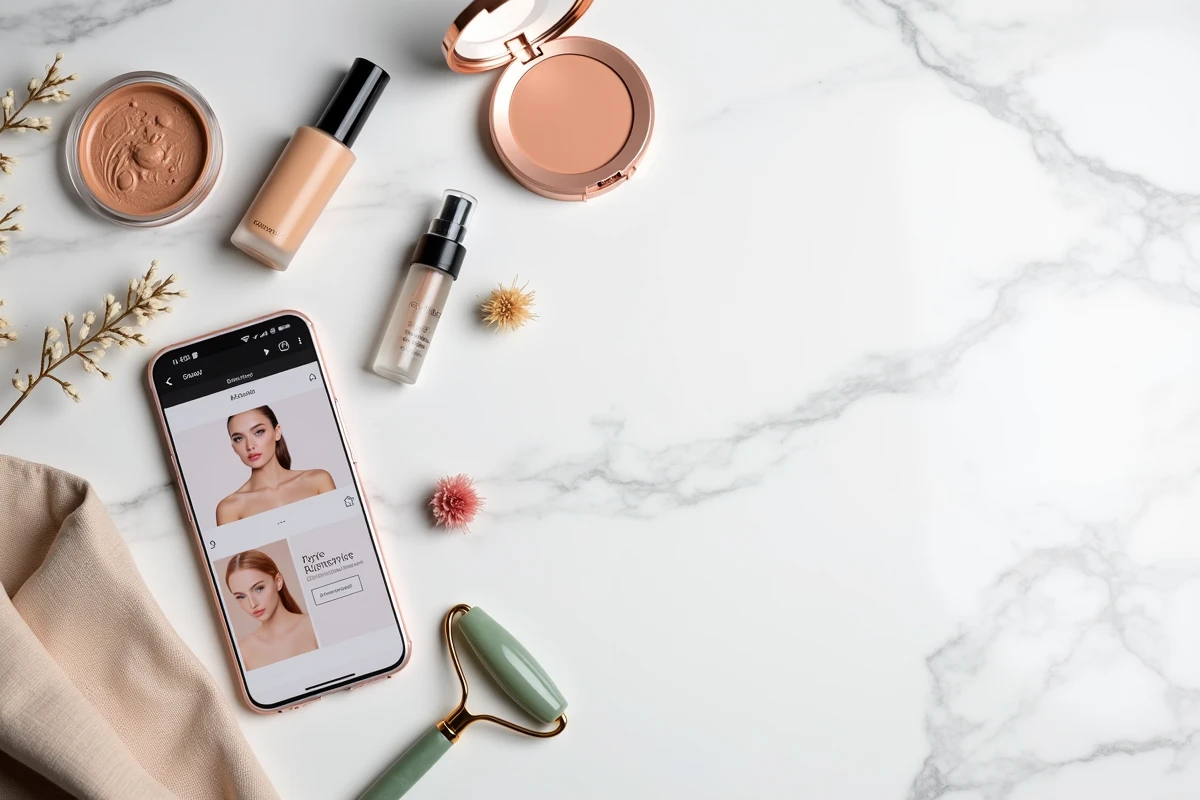
For makeup, the question of shade remains trickier. Virtual try-ons using augmented reality exist, but their reliability heavily depends on screen calibration and ambient lighting. Ordering a foundation solely based on an AR filter remains risky. The most reliable solution is to order a sample or choose an online store that offers free returns on unsuitable shades.
Composition of Cosmetic Products: What to Read Before Buying
The INCI list (International Nomenclature of Cosmetic Ingredients) appears on every product sold in Europe. Ingredients are listed in descending order of concentration. Three practical pointers:
- If an active ingredient touted on the product page (hyaluronic acid, niacinamide, retinol) appears at the end of the list, its concentration is likely too low to produce visible results
- Synthetic fragrances appear under the term “fragrance,” which does not reveal which aromatic compounds are used. Sensitive skin types benefit from avoiding these mentions
- Controversial preservatives (like certain long-chain parabens) are already banned in the EU, but others remain permitted. A store that displays the complete list of ingredients on its product sheets allows consumers to verify before purchase
Sustainability of Cosmetic Packaging: Beyond Marketing Promises
Brands heavily promote their “recyclable” or “eco-designed” packaging. The reality is more nuanced. A recyclable plastic bottle will only be recycled if the local sorting facility takes it, which depends on the type of resin and the presence of an integrated pump or mirror.
Refillable formats are progressing in skincare and makeup (powder compacts, foundations, cream jars). Their actual ecological interest depends on the number of refills purchased: below three refills, the environmental benefit is marginal compared to a standard package, as the production of the initial refillable container consumes more material.
Online stores that clearly indicate which products have refills, and at what price, allow consumers to make a real calculation rather than relying on a green pictogram on the product sheet.
The evolution of the online beauty market is less about the emergence of new miracle actives than about structuring information around products. Regulatory frameworks for claims, transparency about composition, and purchasing formats suited to short routines: stores that precisely document what they sell better meet current expectations than those that pile promises on their category pages.